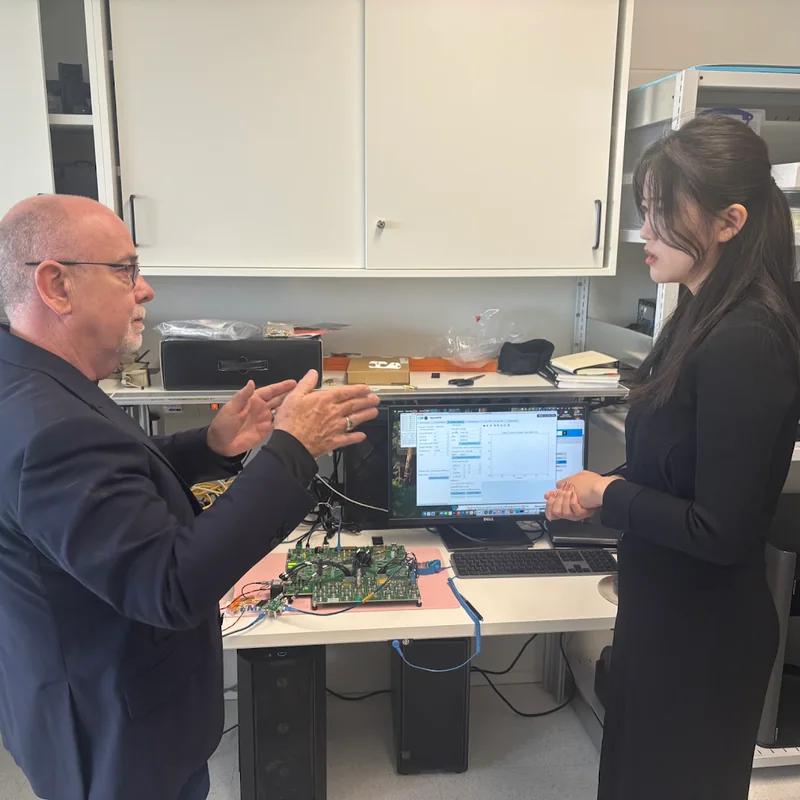
Robotic prosthesis control
Recurrent neural network control with the EdgeDRNN accelerator.
With AMBER Lab, Caltech Watch on YouTubeAlgorithms ↔ Hardware
We study neuromorphic algorithm–hardware co-design for energy-efficient edge intelligence. Our work bridges learning methods, sensing systems and the hardware that makes them practical.
Explore the connections
Select a module to discover its research, experiments and publications.
Research direction 05
AI agents compose, connect and refine circuit building blocks — from transistors to systems.
Research direction 01
Learning-based models, calibration and digital predistortion for more efficient radio-frequency and mixed-signal systems.
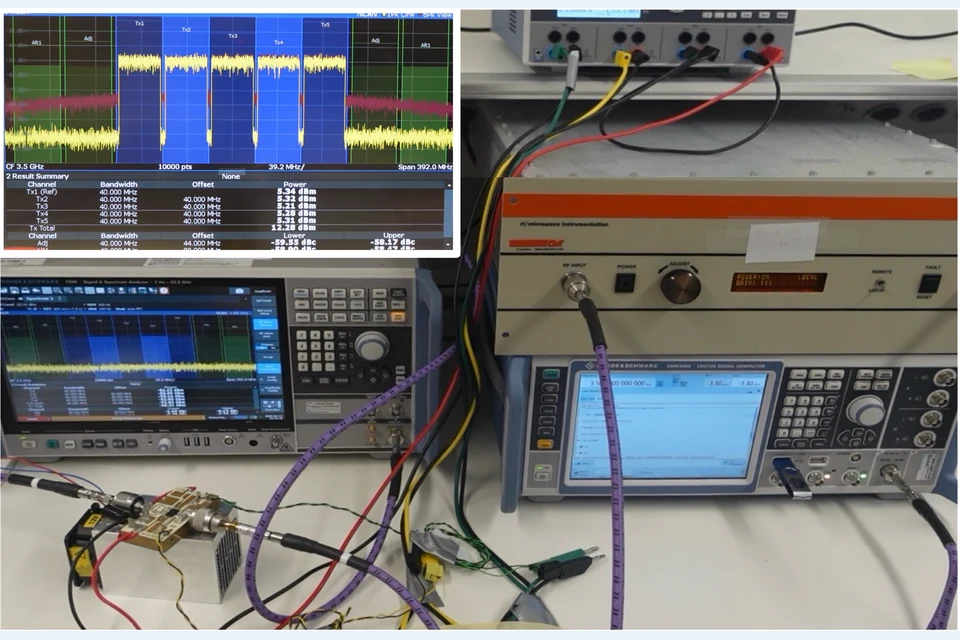
Research direction 02
Brain-inspired algorithms and accelerators that exploit temporal and spatial sparsity to reduce unnecessary computation.
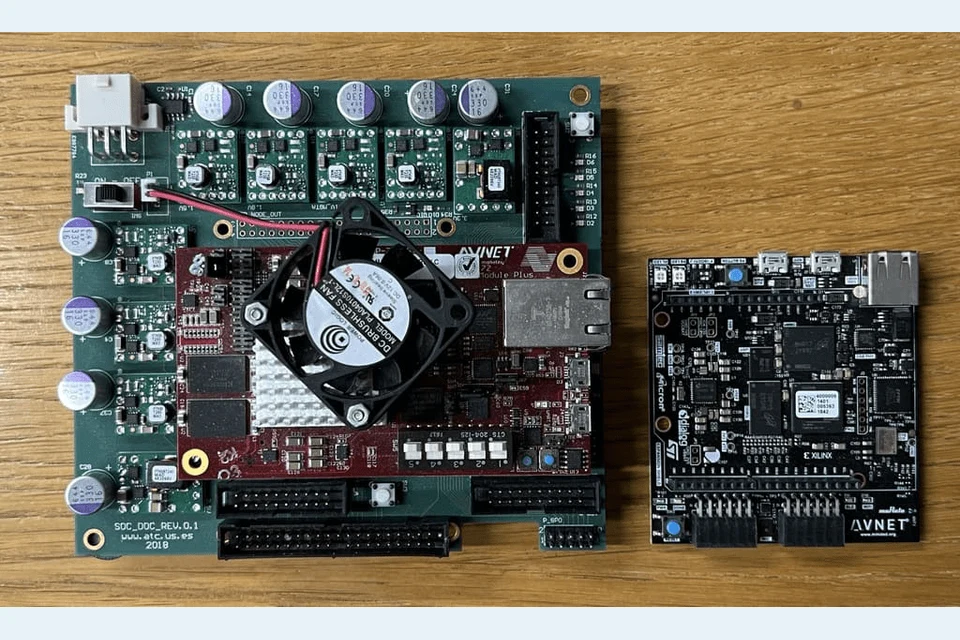
Research direction 03
Efficient visual perception, eye tracking and intelligent hardware for extended reality and wearable applications.
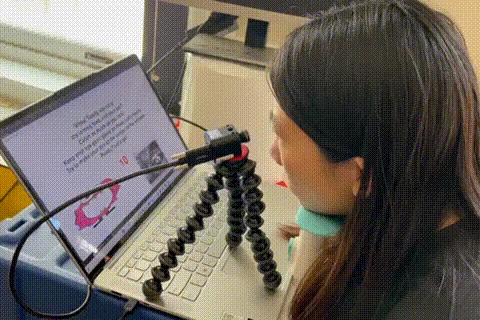
Research direction 04
Energy-efficient speech processing, keyword spotting and radar-based activity recognition for embedded systems.
EMI on GitHub
Explore the code, datasets and models behind our work.
An end-to-end learning framework for power amplifier modeling and digital predistortion, with measured datasets and reproducible benchmarks.
Code · Datasets · BenchmarksA compact Mamba network for speech denoising, with channel pruning, training tools and pretrained models for efficient audio processing.
Code · Pretrained models · PruningThe official RadMamba implementation for radar-based human activity recognition, with data preparation, model training and evaluation workflows.
Code · Training · EvaluationResearch in action
Recurrent neural network control with the EdgeDRNN accelerator.
With AMBER Lab, Caltech Watch on YouTubeReal-time spoken digit recognition using EdgeDRNN.
Read the EdgeDRNN paper Watch on YouTubeInterfacing EdgeDRNN with a dynamic audio sensor.
Explore the silicon cochlea Watch on YouTubeResearch support
Our research is supported by public funding, industry collaborations and a community of academic partners.
Grants, sponsors & awards